skin · · 5 min read
Medi-Facial vs Regular Facial: What's the Difference & Which Do You Need?
Medi-facials, hydrating aqua facials and salon facials compared — what each does, who they suit, how often to get one, and how to choose.
“Facial” can mean anything from a relaxing massage at a salon to a clinical treatment with medical-grade technology. Both have their place — but if you’re booking a facial to fix something, such as dullness, congestion, uneven tone or tired-looking skin, the difference matters.
What is a regular facial?
A regular (salon or spa) facial typically involves cleansing, steaming, exfoliation, extractions, a massage and a mask. It’s relaxing and leaves your skin feeling clean and soft.
Good for: relaxation, a general clean-up, a feel-good treat.
Limitations: results are mostly temporary and surface-level. Products and techniques are general rather than targeted, and extractions done without care can cause irritation or marks.
What is a medi-facial?
A medi-facial is a clinical facial treatment that combines medical-grade technology with active formulations to target a specific skin concern. It’s chosen after a skin assessment and performed in a clinical setting.
Good for: dullness, dehydration, congestion and enlarged pores, uneven texture, early signs of ageing and pigmentation-prone skin — and for anyone who wants visible, more lasting results.
Medi-facial vs regular facial at a glance
| Regular facial | Medi-facial | |
|---|---|---|
| Goal | Relaxation and general cleansing | Targeted improvement of a specific concern |
| Assessment | Usually none | Skin assessment before treatment |
| Technology | Steam, massage, manual techniques | Medical-grade devices (aqua, light, laser or radiofrequency) |
| Products | General cosmetic products | Active, clinical formulations |
| Results | Temporary freshness | Visible, cumulative improvement |
| Setting | Salon or spa | Clinic |
Types of medi-facials
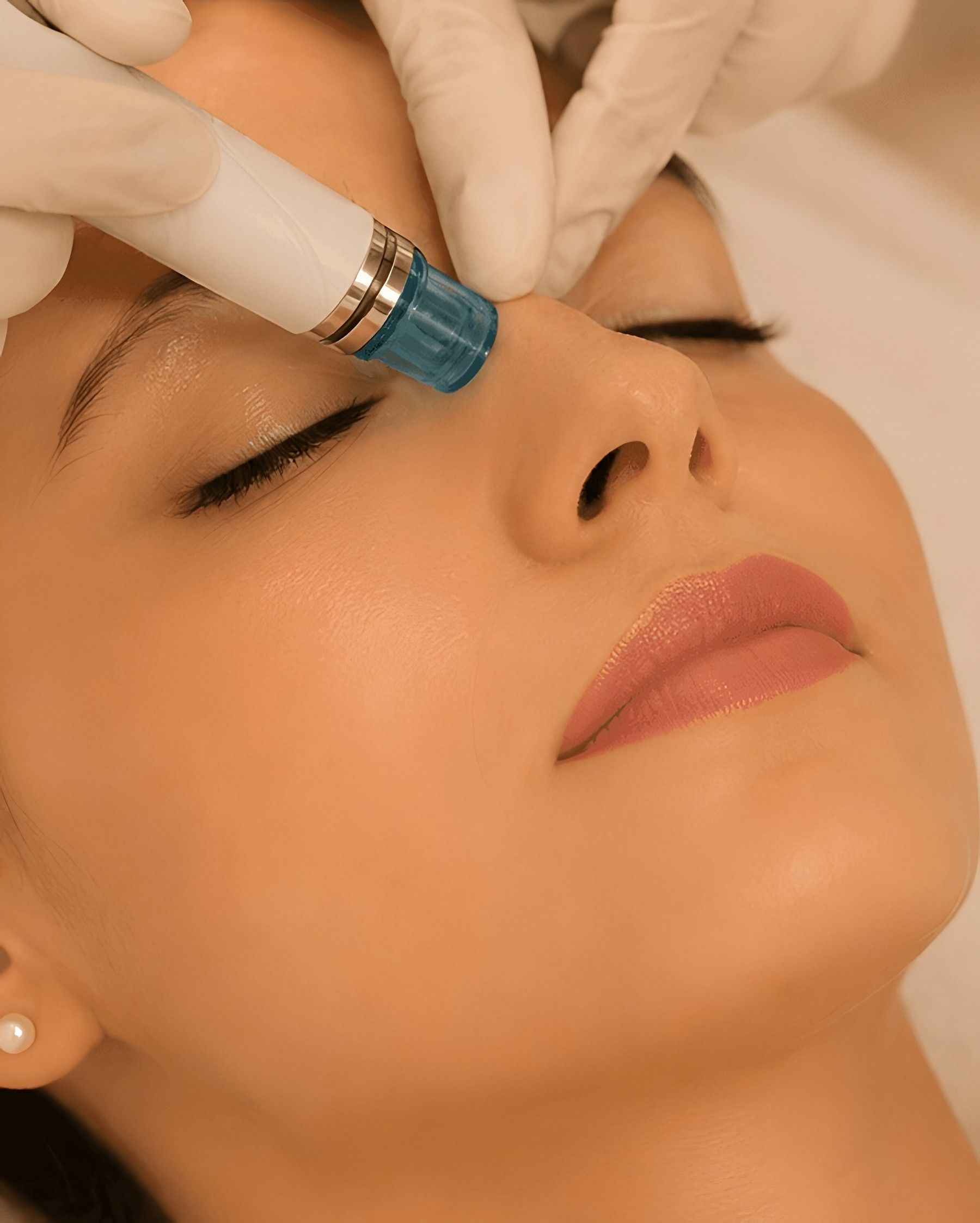
Hydrating aqua facials use water-based technology to cleanse, exfoliate and extract while infusing hydrating serums. They’re excellent for dull, dehydrated or congested skin.
Exfoliating and oxygenating facials gently resurface the skin, boost radiance and revive tired skin — great as a pre-event refresh.
Laser-based medi-facials use light energy to improve clarity, texture and radiance.
Deep-cleansing medi-facials target oily, acne-prone skin, helping control sebum and clear congestion.
Firming and rejuvenating medi-facials use technologies such as radiofrequency to support collagen and improve firmness.
Medi-facials at The Asense
At The Asense, each medi-facial is selected after a detailed skin consultation:
- Aqua Touch — a deeply hydrating, multi-step treatment that cleanses, exfoliates and infuses the skin with essential nutrients. Ideal for dull, dehydrated or congested skin.
- RE-GEN — an advanced medi-facial for tired, dull or ageing skin, designed to enhance elasticity and promote a smoother, more radiant appearance.
- Oxy-Revive — gently exfoliates and revives tired-looking skin; a perfect pre-event pick-me-up.
- Glow Getter — a laser-based medi-facial for a luminous, camera-ready glow, enhancing clarity and smoothing texture.
- Eclipse — a deep-cleansing treatment for acne-prone and oily skin.
Which medi-facial for which concern?
| Your main concern | Often chosen at The Asense |
|---|---|
| Dull, dehydrated or congested skin | Aqua Touch |
| Tired skin, loss of firmness or glow | RE-GEN |
| Quick refresh before an event | Oxy-Revive |
| Uneven tone, wanting a luminous finish | Glow Getter |
| Oily, acne-prone skin and clogged pores | Eclipse |
This is a starting point — your clinician will recommend the right option after assessing your skin.
Signs your skin would benefit from a medi-facial
- Your skin looks dull or tired even with a good routine
- Makeup sits unevenly or looks cakey
- Pores look enlarged or clogged, with frequent blackheads
- Skin feels tight or dehydrated, especially in winter or air-conditioning
- You have an event coming up and want your skin at its best
- Your skin has been stressed by travel, pollution or a hectic schedule
Medi-facial myths
- “Facials cause breakouts.” Poorly done extractions or the wrong products can — but a medi-facial chosen for your skin should help clear congestion, not cause it. A little purging can sometimes occur with active treatments.
- “Medi-facials are only for problem skin.” Many people use them for maintenance and prevention.
- “All facials are the same.” The technology, products and assessment behind a medi-facial are what set it apart.
- “You need a facial every week.” For most people, every three to six weeks is plenty.
How often should you get a medi-facial?
For ongoing maintenance, many people have a medi-facial every three to six weeks — roughly in step with the skin’s natural renewal cycle. Before a big event, book a few days to a week ahead so any pinkness has settled and your skin is at its best. If you’re planning for a wedding, our bridal skin prep timeline maps out exactly when to book what.
Before and after your medi-facial
Before: avoid retinoids, exfoliating acids and waxing on the face for a few days, and come with clean skin if possible.
After: keep skin hydrated, use sunscreen, and avoid heavy makeup, saunas and strong actives for a day or two.
Which should you choose?
If you want to relax and unwind, a regular facial is lovely. If you want your skin to look different — brighter, clearer, smoother, more hydrated — a medi-facial is the better investment.
Not sure which medi-facial suits you? Book a consultation at The Asense in West Punjabi Bagh, and we’ll recommend the right treatment for your skin. You might also find our guide on why your skin isn’t glowing helpful.
This article is for general education and is not a substitute for a personal consultation.
Frequently asked questions
What is a medi-facial?
A medi-facial is a clinical facial treatment that uses medical-grade technology and active formulations to target specific skin concerns such as dullness, dehydration, congestion, pigmentation or early ageing. It is chosen after a skin assessment and performed in a clinical setting, unlike a salon facial, which focuses mainly on cleansing and relaxation.
Is a medi-facial better than a normal facial?
For targeted results, usually yes. A regular facial is relaxing and leaves skin feeling clean and soft, but its effects are mostly temporary and surface-level. A medi-facial is designed around a specific concern and uses technology and ingredients that work more deeply, making it better suited to treating dullness, congestion, texture or tone.
How often should I get a medi-facial?
Many people have a medi-facial every three to six weeks as part of ongoing skin maintenance, roughly in line with the skin's natural renewal cycle. Before an event, a medi-facial a few days to a week beforehand is ideal. Your clinician will suggest a schedule based on your skin.
Is there downtime after a medi-facial?
Most medi-facials have little or no downtime. Skin may look slightly pink for a few hours, and you'll usually be advised to avoid strong actives, heavy makeup and sun exposure for a short while afterwards.
Which medi-facial is best before a wedding or event?
Hydrating and brightening medi-facials are popular before events because they leave skin fresh and radiant with minimal downtime. At The Asense, options such as Oxy-Revive, Aqua Touch and Glow Getter are often chosen as pre-event treatments, depending on your skin.