skin · · 7 min read
Hormonal Acne & PCOS Acne: Why It Happens and How to Treat It
Breakouts along the jaw and chin that flare with your cycle? What hormonal and PCOS-related acne is, how to recognise it, and the treatments that help.
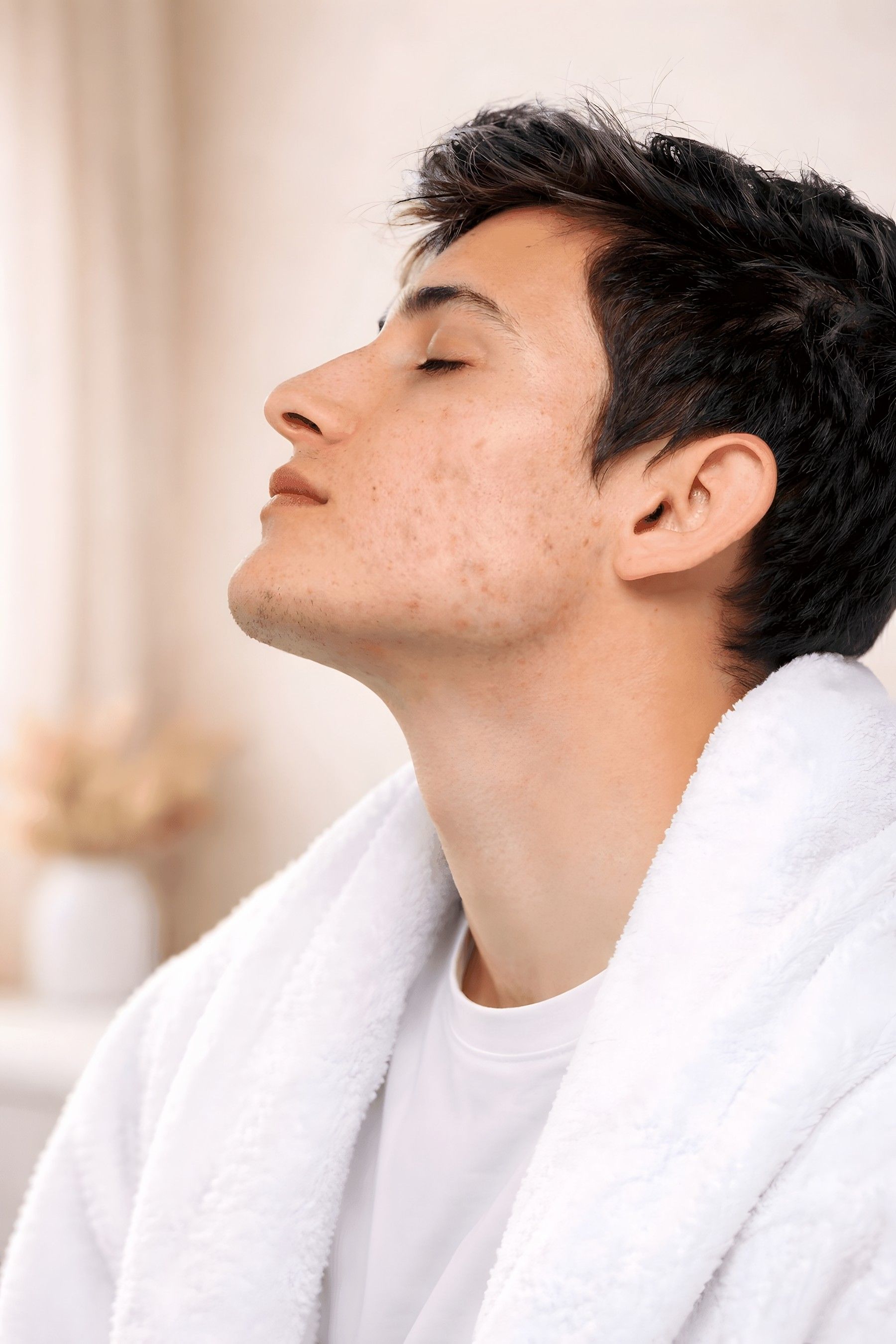
If your breakouts cluster along your jawline and chin, feel deep and painful, and seem to flare every month before your period, you may be dealing with hormonal acne. It’s one of the most common reasons adult women seek help for their skin — and it’s often connected to PCOS (polycystic ovary syndrome).
Understanding the hormonal link is the key to treating it properly.
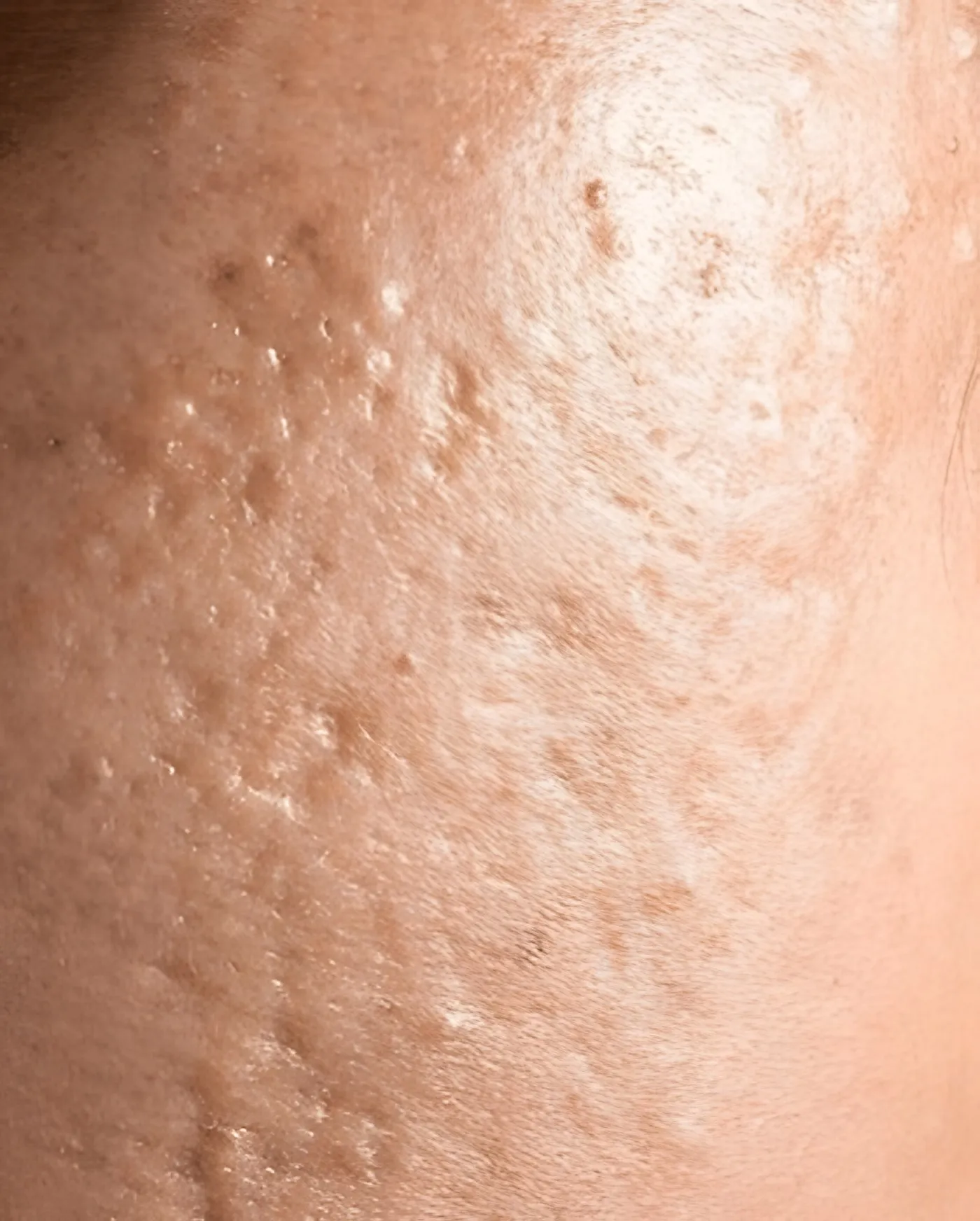
What causes hormonal acne?
Hormones called androgens stimulate the oil glands in your skin. When androgen levels rise — or your skin is especially sensitive to them — your skin produces more oil. Combined with dead skin cells, that oil clogs pores, bacteria multiply and inflammation follows.
Hormone levels naturally fluctuate with your menstrual cycle, during pregnancy, around starting or stopping hormonal contraception, during perimenopause and with stress. Conditions such as PCOS cause persistently higher androgen levels.
How to recognise hormonal acne
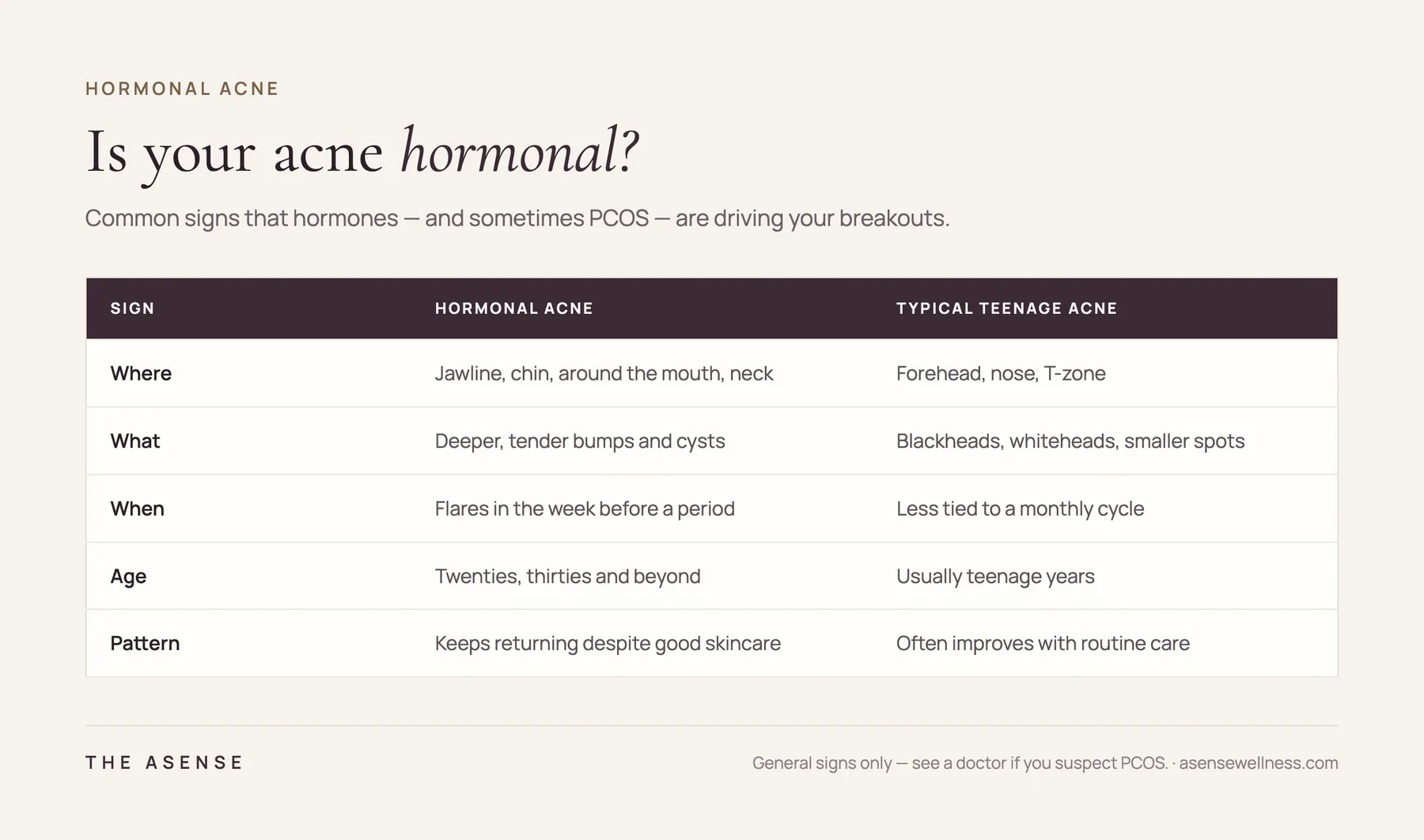
- Location: jawline, chin, around the mouth and neck
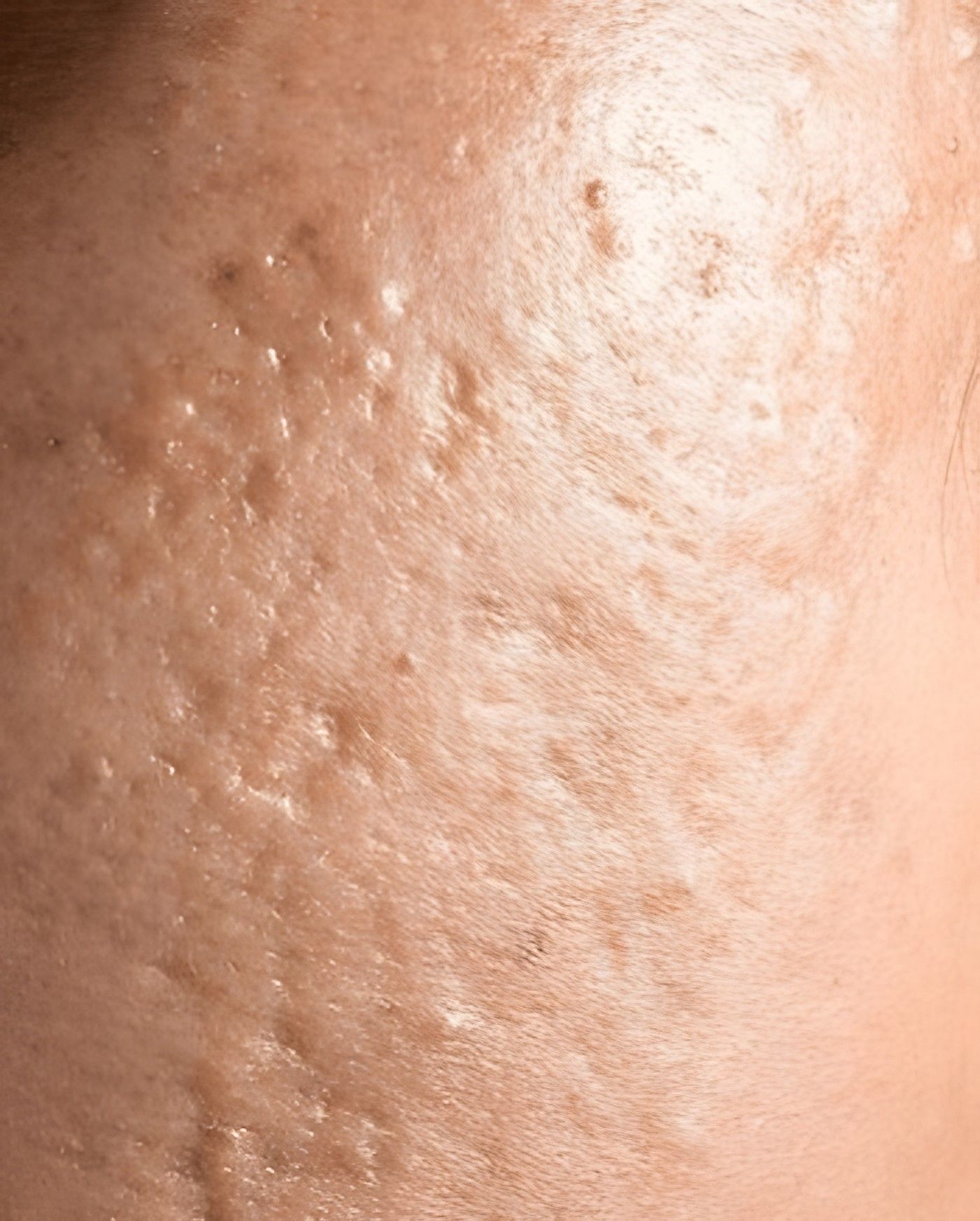
- Type: deeper, tender bumps and cysts rather than just blackheads
- Timing: flares in the week before your period
- Age: continues or starts in your twenties, thirties or later
- Persistence: keeps returning despite good skincare
PCOS and acne
PCOS is a common hormonal condition. Alongside acne, other signs can include:
- Irregular or missed periods
- Excess hair on the face, chest or body
- Thinning hair on the scalp
- Weight changes or difficulty losing weight
- Darkening of skin on the neck or underarms
If you recognise several of these, see a doctor for evaluation. Treating the hormonal cause makes acne treatment far more effective. Excess facial hair from PCOS can also be managed with laser hair reduction, and neck darkening is covered in our guide to body pigmentation.
How hormonal acne is treated
The most effective approach combines three things:
1. Address the hormones
A doctor may recommend tests and, where appropriate, medical treatment for underlying hormonal factors. This is especially important with PCOS.
2. A consistent, gentle routine
- A gentle cleanser twice a day — over-washing makes skin oilier
- Salicylic acid to keep pores clear
- A retinoid at night to regulate cell turnover (introduce gradually)
- Niacinamide to calm redness and regulate oil
- A lightweight, non-comedogenic moisturiser
- Daily sunscreen — healing skin pigments easily
3. In-clinic acne treatments
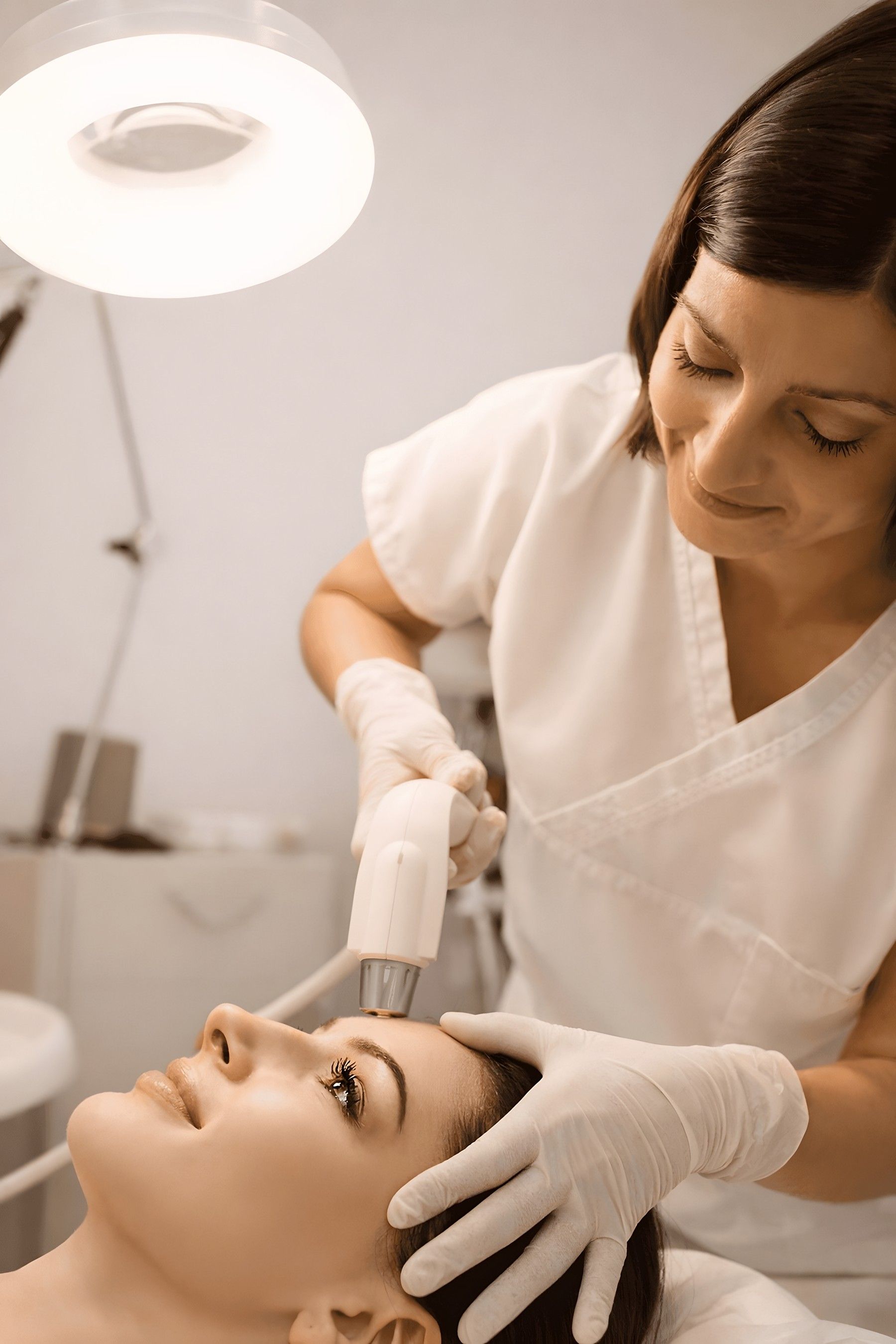
Professional treatments help calm active breakouts, clear congestion and prevent marks:
- Eclipse — a deep-cleansing treatment that purifies, refines and rebalances acne-prone and oily skin, helping control sebum production.
- Acne Reset — a targeted treatment designed to calm active breakouts, reduce inflammation and control excess oil.
Lifestyle habits that help
- Sleep seven to eight hours — poor sleep affects hormones.
- Manage stress, which raises cortisol and can trigger flares.
- Move regularly — exercise supports insulin sensitivity, especially with PCOS.
- Watch your triggers — some people notice sugar or dairy make breakouts worse.
- Hands off — picking deep hormonal spots leads to marks and scars.
Preventing marks and scars
Deep hormonal breakouts are more likely to leave dark marks and scars. Treating acne early, avoiding picking and using sunscreen daily all help. If marks or scars have already formed, read our guide to acne scar types and treatments.
Get a plan that fits your skin
At The Asense in West Punjabi Bagh, acne care begins with a detailed consultation led by Dr. Anisha Rai Kumar, our Medical Director, to understand your skin, triggers and history. Book a consultation.
This article is for general education and is not a substitute for medical advice. If you suspect PCOS or another hormonal condition, please see a doctor for evaluation.
Frequently asked questions
How do I know if my acne is hormonal?
Hormonal acne often appears along the jawline, chin and neck, tends to flare in the days before a period, and frequently includes deeper, painful bumps rather than only blackheads and whiteheads. It commonly continues into the twenties, thirties and beyond.
Is PCOS acne different from normal acne?
PCOS acne is driven by higher androgen levels, so it tends to be persistent, appears on the lower face, jaw and neck, and often comes with other signs such as irregular periods, excess facial or body hair, or hair thinning. It usually needs the hormonal cause addressed alongside skin treatment.
Can hormonal acne be cured?
Hormonal acne can usually be controlled very well, though it may recur when hormones fluctuate. A combination of medical care for the underlying hormonal factors, a consistent routine and in-clinic treatments gives the best long-term results.
Does diet affect hormonal acne?
For some people, high-sugar foods and dairy appear to make breakouts worse. Diet isn't the main cause, but a balanced diet, regular exercise and good sleep support hormonal balance and skin health.
Which treatments at The Asense help acne?
Eclipse is a deep-cleansing treatment for oily, acne-prone skin, and Acne Reset is designed to calm active breakouts, reduce inflammation and control excess oil. Your plan is decided after a detailed consultation.